Arlington Row and Bibury’s wool trade
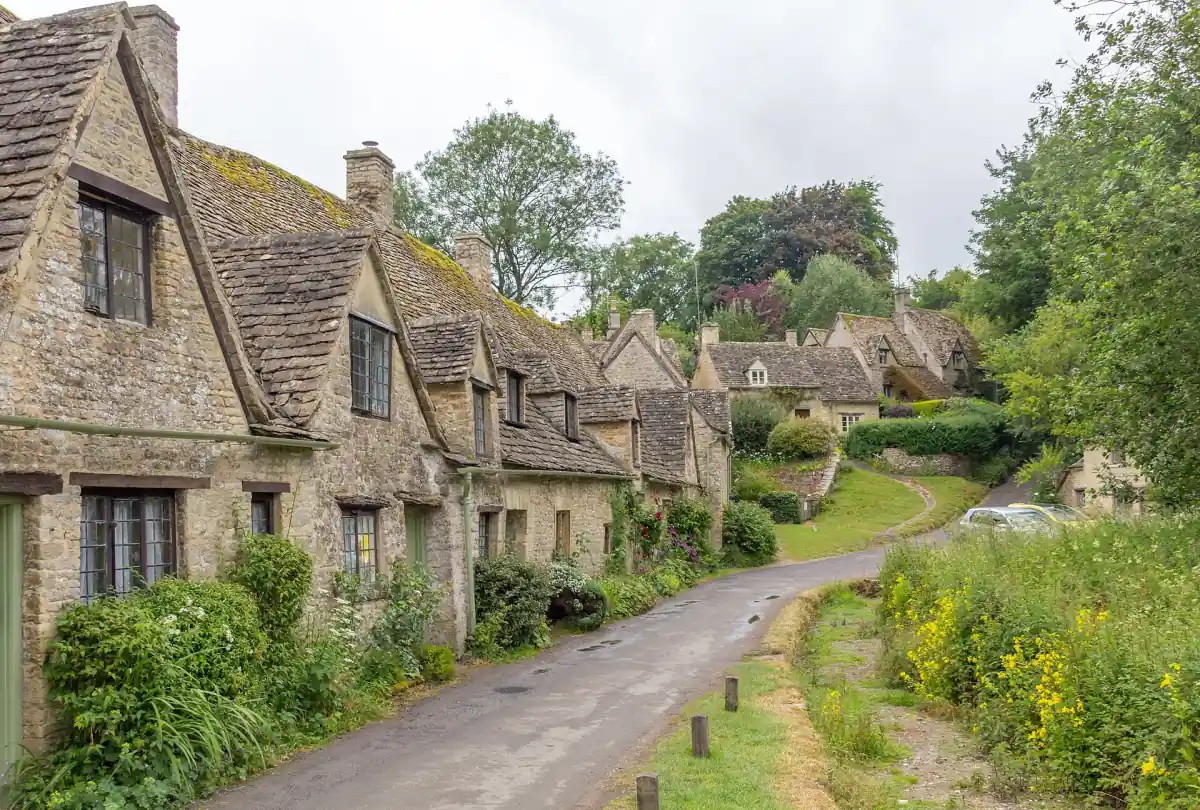
Arlington Row in Bibury probably began as a monastic wool store around 1380 and was converted into weavers’ cottages in the 17th century. The change in use helps explain why a row known today for its domestic scale has a much older story. Start at the public path in front of the cottages, where the buildings can be seen together as a row.
Arlington Mill served as both a grain mill and a fulling mill. Fulling was a stage in making woollen cloth, and the frames once used for drying on the nearby meadow gave Rack Isle its name. The cottages, mill and meadow illustrate different parts of the village’s wool trade. A look across the wet meadow helps put the cottages into context before you go on to the rest of Bibury.
Rack Isle is now a wet meadow by the River Coln. There is a view of the row from the riverside, so give yourself time to look across the water as well as from the path along the cottages. Follow the marked paths around the meadow and keep dogs on a lead.
Visit Arlington Row
This day trip includes a visit to Arlington Row and nearby villages.
Hand-picked tours, booked through GetYourGuide. Prices are indicative starting prices in British pounds (as of November 2026). Tap a tour for live availability and the current price in your currency.

Day trip to Arlington Row from London
A small-group trip by air-conditioned minibus includes Arlington Row in Bibury alongside Bourton-on-the-Water and Castle Combe.
Arlington Row’s listed cottages and restoration
Arlington Row is Grade I listed. The Royal Society of Arts carried out repairs in 1929, and the National Trust restored the cottages in the early 1970s. Those repairs and the restoration belong to a later chapter in the buildings’ history, after the conversion from wool storage to housing.
The National Trust owns Arlington Row, and the cottages are still used as homes. Some are let to visitors as accommodation. The public footpath is the place to appreciate the architecture, from the stone walls to the way the cottages follow the line of the lane. The meadow view shows the whole row in its setting, while the footpath gives a closer look at the buildings.

Visiting Arlington Row from the public footpath
Arlington Row is an outdoor visit from public footpaths. Keep voices low by the cottages and stay out of the houses and gardens. The paved stretch in front of the row and around Rack Isle is level, with a narrow bridge across the millstream and narrower parts of the footpath. Give anyone coming the other way room to cross and stop for photos where others can pass.
Vehicle access to Arlington Row is for residents only. Approach Arlington Row on foot. The narrow lane is steep in places, with no space for visitor parking or turning at the cottages. The Bibury transport guide covers arrival by bus and where to look for parking in the village. To spend longer by the water, follow the short walk around Rack Isle.
The London small-group trip visits the outside of Arlington Row as part of a 10-hour outing with a driver-guide. It combines the cottages with Bourton-on-the-Water and Castle Combe, with meals bought separately. An independent visit gives more control over time by the meadow, while a private day trip suits groups that want to fit Bibury into an adjustable route.
Questions about visiting Arlington Row
Arlington Row can be seen from the public path in front of the cottages or from across the meadow.
Can visitors go inside the Arlington Row cottages?
No. The Arlington Row cottages are private homes, and the gardens are private too. Stay on public footpaths, keep voices down and leave doorways clear. For a wider view of the line of cottages, look back from the public path by Rack Isle.
How old is Arlington Row?
Around 1380 is the likely date of the original wool store at Arlington Row. The conversion into weavers’ cottages came in the 17th century. A visit brings both periods into focus, especially when the row is seen alongside the former mill and the meadow that gave wool dryers space for their frames.
Can I park at Arlington Row itself?
No. Vehicle access to Arlington Row is for residents only. The approach to Arlington Row is narrow and steep in places, with no visitor parking or space to turn by the houses. Plan to arrive on foot from elsewhere in Bibury and allow time to find a permitted parking space if driving into the village.